


speedy-seeds.co.uk
Winter Dwarf Garden Peas | Feltham First | 10 Seeds | Hardy Heirloom Variety
Regular price
£3.49 GBP
Regular price
Sale price
£3.49 GBP
Unit price
per
Tax included.
Couldn't load pickup availability
Please find for sale 10 Dwarf Garden Pea seeds - the variety is "Feltham First" - renowned as being the hardiest of all peas that gardeners can grow here in the UK. This pea cultivar was first developed almost 200 years ago and with climate now signficantly warmer, these can be started even earlier.
INSTRUCTIONS - TO SAVE PAPER I NO LONGER SEND OUT WRITTEN INSTRUCTIONS TO CUSTOMERS. INSTRUCTIONS ARE BELOW SO PLEASE BOOKMARK THIS PAGE. FEEL FREE TO MESSAGE ME WITH ANY GROWING QUESTIONS.
Growing Guide
Sowing:
In well drained soil, peas can be sown outdoors in November, for an early crop. In spring, wait until the soil is warm to the touch, which will be some time between the middle of March and the middle of May, depending on your soil and you location. Make successive sowings every two weeks.
Sowing Indoors:
To grow an early crop, seeds can be sowed in lengths of old guttering. Drill drainage holes at regular intervals along the base. Fill to the top with seed compost and space the seeds about 7.5cm (3in) apart. Place the guttering in the greenhouse or cold frame. Keep the compost moist and transplant into the garden once the seedlings have established. Dig out a shallow trench and gently slide the pea seedlings into it. Water and cover with cloches to encourage growth. Autumn and early spring sowings will benefit from cloche protection.
In well drained soil, peas can be sown outdoors in November, for an early crop. In spring, wait until the soil is warm to the touch, which will be some time between the middle of March and the middle of May, depending on your soil and you location. Make successive sowings every two weeks.
Sowing Indoors:
To grow an early crop, seeds can be sowed in lengths of old guttering. Drill drainage holes at regular intervals along the base. Fill to the top with seed compost and space the seeds about 7.5cm (3in) apart. Place the guttering in the greenhouse or cold frame. Keep the compost moist and transplant into the garden once the seedlings have established. Dig out a shallow trench and gently slide the pea seedlings into it. Water and cover with cloches to encourage growth. Autumn and early spring sowings will benefit from cloche protection.
Sowing Direct:
Peas sown in cold, wet ground will rot so make sure the soil is warm. In early spring, cover the soil with polythene before sowing and then protect seedlings with fleece.
Sow seed in a single row 5 to 10cm (2 to 4in) apart, ensuring there is enough space for plant supports. Make a single V-shaped drill, 5cm (2in) deep, water the base of the drill and sow the peas. A second row can be added, as long as it’s 30cm (12in) away from the first drill.
It is important to have room to get between the rows to pick – 3ft is probably the minimum and 6ft is ideal. If using the latter spacing, a crop of radish or lettuce can be grown in the gap, to be harvested before you start picking the peas.
Water your peas well after sowing, and then leave them – except in very dry weather – until they flower, when they should have a really good soak to encourage good pod formation. Keep them weeded until well established.
Supporting plants:
Sow seed in a single row 5 to 10cm (2 to 4in) apart, ensuring there is enough space for plant supports. Make a single V-shaped drill, 5cm (2in) deep, water the base of the drill and sow the peas. A second row can be added, as long as it’s 30cm (12in) away from the first drill.
It is important to have room to get between the rows to pick – 3ft is probably the minimum and 6ft is ideal. If using the latter spacing, a crop of radish or lettuce can be grown in the gap, to be harvested before you start picking the peas.
Water your peas well after sowing, and then leave them – except in very dry weather – until they flower, when they should have a really good soak to encourage good pod formation. Keep them weeded until well established.
Position:
Peas require a sunny, position with well-drained but rich soil with a neutral ph, so if yours is at all acidic, the ground should be limed a few weeks before sowing. Ideally, the ground would be dug and manured the autumn before sowing, but if you have good garden soil, a thin dressing of good garden compost or well-rotted manure just before sowing is adequate. This will help to improve the soil’s moisture-retaining ability during hot, dry summers.
Peas require a sunny, position with well-drained but rich soil with a neutral ph, so if yours is at all acidic, the ground should be limed a few weeks before sowing. Ideally, the ground would be dug and manured the autumn before sowing, but if you have good garden soil, a thin dressing of good garden compost or well-rotted manure just before sowing is adequate. This will help to improve the soil’s moisture-retaining ability during hot, dry summers.
All but the most dwarf varieties need support. Once peas have reached, 5 to 8cm (2 to 3in) in height and their tendrils begin to reach out for support, place supports next to plants. Use bamboo canes, pea sticks, trellis, netting, chicken wire or use any garden pruning that produces twiggy branches.
Problem? Dont rush to Feedback - get in touch and I will sort it out!
Materials
Materials
Shipping & Returns
Shipping & Returns
Dimensions
Dimensions
Care Instructions
Care Instructions


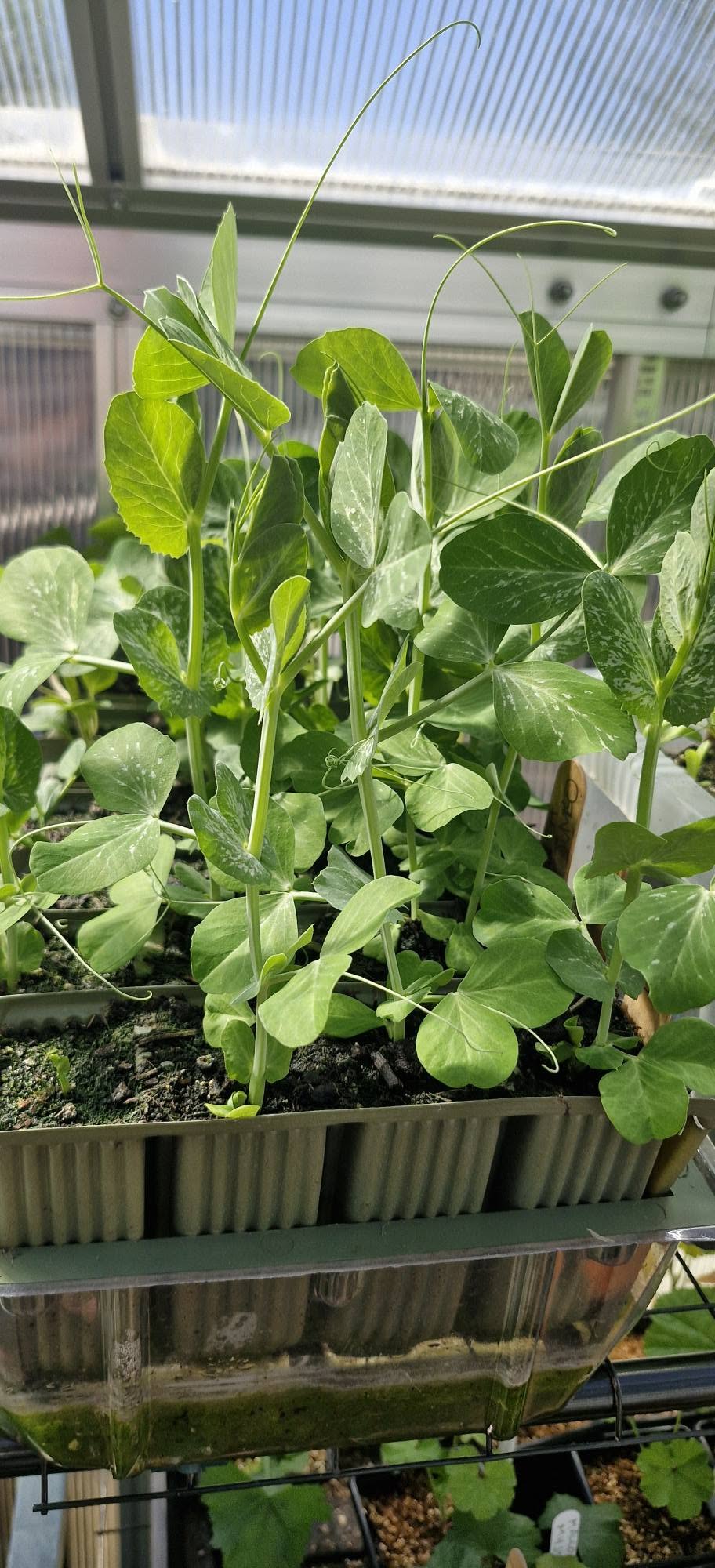
Image with text
Pair text with an image to focus on your chosen product, collection, or blog post. Add details on availability, style, or even provide a review.
-
Free Shipping
Pair text with an image to focus on your chosen product, collection, or blog post. Add details on availability, style, or even provide a review.
-
Hassle-Free Exchanges
Pair text with an image to focus on your chosen product, collection, or blog post. Add details on availability, style, or even provide a review.